Lesson 2 · 2 of 20
Variables and basic types · C
Declare variables in C with the int, double and char types, change their values, use const and check with sizeof how many bytes each type takes.
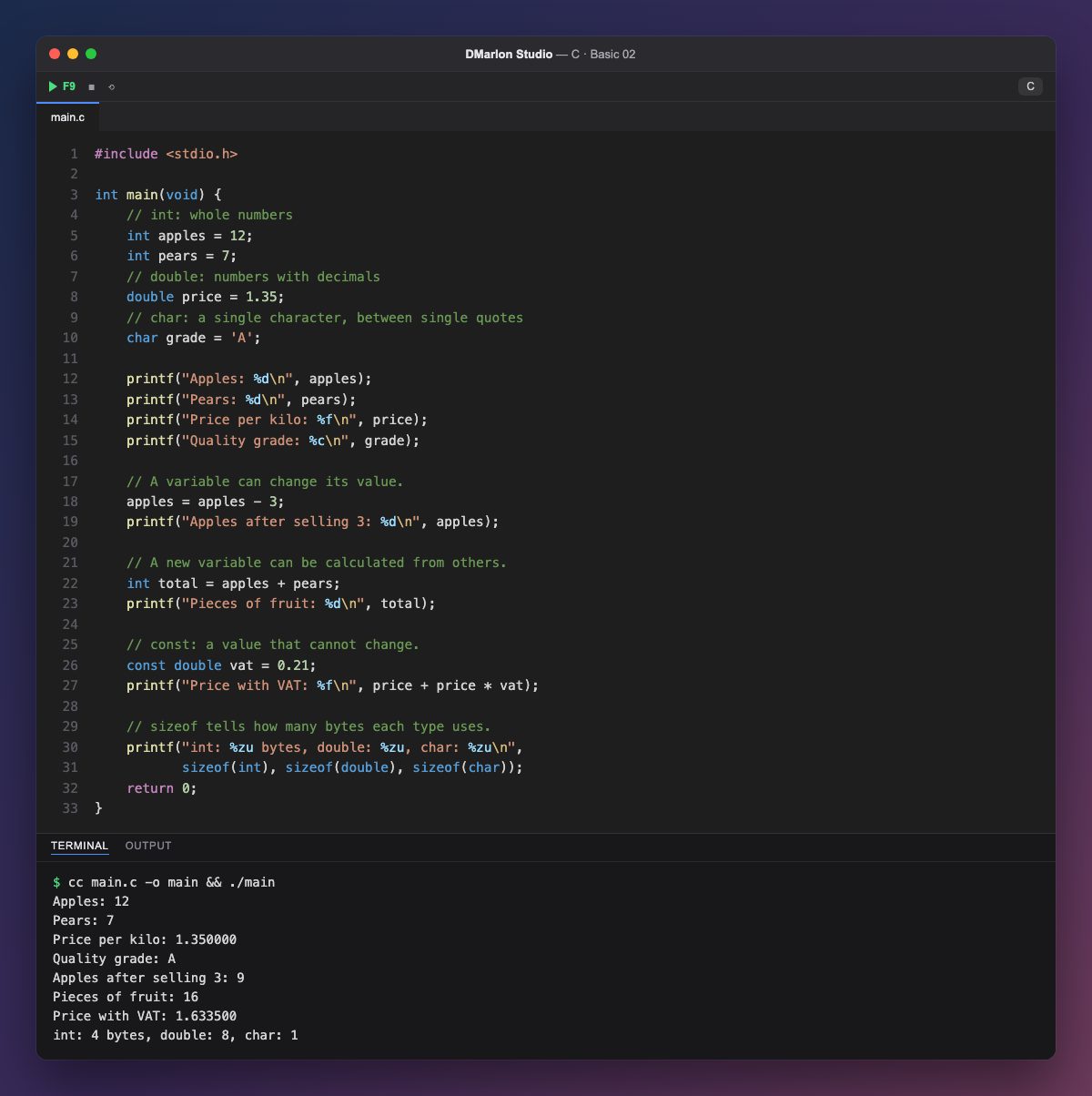
A variable is a named piece of memory. In C you have to declare it with its type before using it: int apples = 12; creates a whole-number variable called apples and gives it the value 12.
The three basic types in the example are `int` for whole numbers, `double` for numbers with decimals (1.35) and `char` for a single character, written between single quotes: 'A'. The type decides what fits in the variable and how printf writes it: %d for int, %f for double and %c for char.
A variable can change its value: apples = apples - 3; first works out 12 - 3 and then stores the result, 9, in the same variable. You can also create a variable from others, like total.
With `const` the value is fixed: if you tried to change vat later, the compiler would refuse. Finally, `sizeof` tells you how many bytes each type takes; it is printed with %zu. Notice that %f shows six decimals: lesson 4 shows how to choose how many.
Code · main.c
#include <stdio.h>int main(void) { // int: whole numbers int apples = 12; int pears = 7; // double: numbers with decimals double price = 1.35; // char: a single character, between single quotes char grade = 'A'; printf("Apples: %d\n", apples); printf("Pears: %d\n", pears); printf("Price per kilo: %f\n", price); printf("Quality grade: %c\n", grade); // A variable can change its value. apples = apples - 3; printf("Apples after selling 3: %d\n", apples); // A new variable can be calculated from others. int total = apples + pears; printf("Pieces of fruit: %d\n", total); // const: a value that cannot change. const double vat = 0.21; printf("Price with VAT: %f\n", price + price * vat); // sizeof tells how many bytes each type uses. printf("int: %zu bytes, double: %zu, char: %zu\n", sizeof(int), sizeof(double), sizeof(char)); return 0;}Output · cc main.c -o main && ./main
Apples: 12
Pears: 7
Price per kilo: 1.350000
Quality grade: A
Apples after selling 3: 9
Pieces of fruit: 16
Price with VAT: 1.633500
int: 4 bytes, double: 8, char: 1
Key points
- In C every variable is declared with its type.
intwhole numbers,doubledecimals,charone character in' '.=stores a value; the variable can change later.conststops the value from changing.sizeofgives the size in bytes.
Exercise
Add a double variable with the weight of the pears in kilos and print how much they cost at price euros a kilo.