Lesson 12 · 12 of 20
Functions and multiple results · Go
Write Go functions with parameters and a result type, return several values at once and use named results.
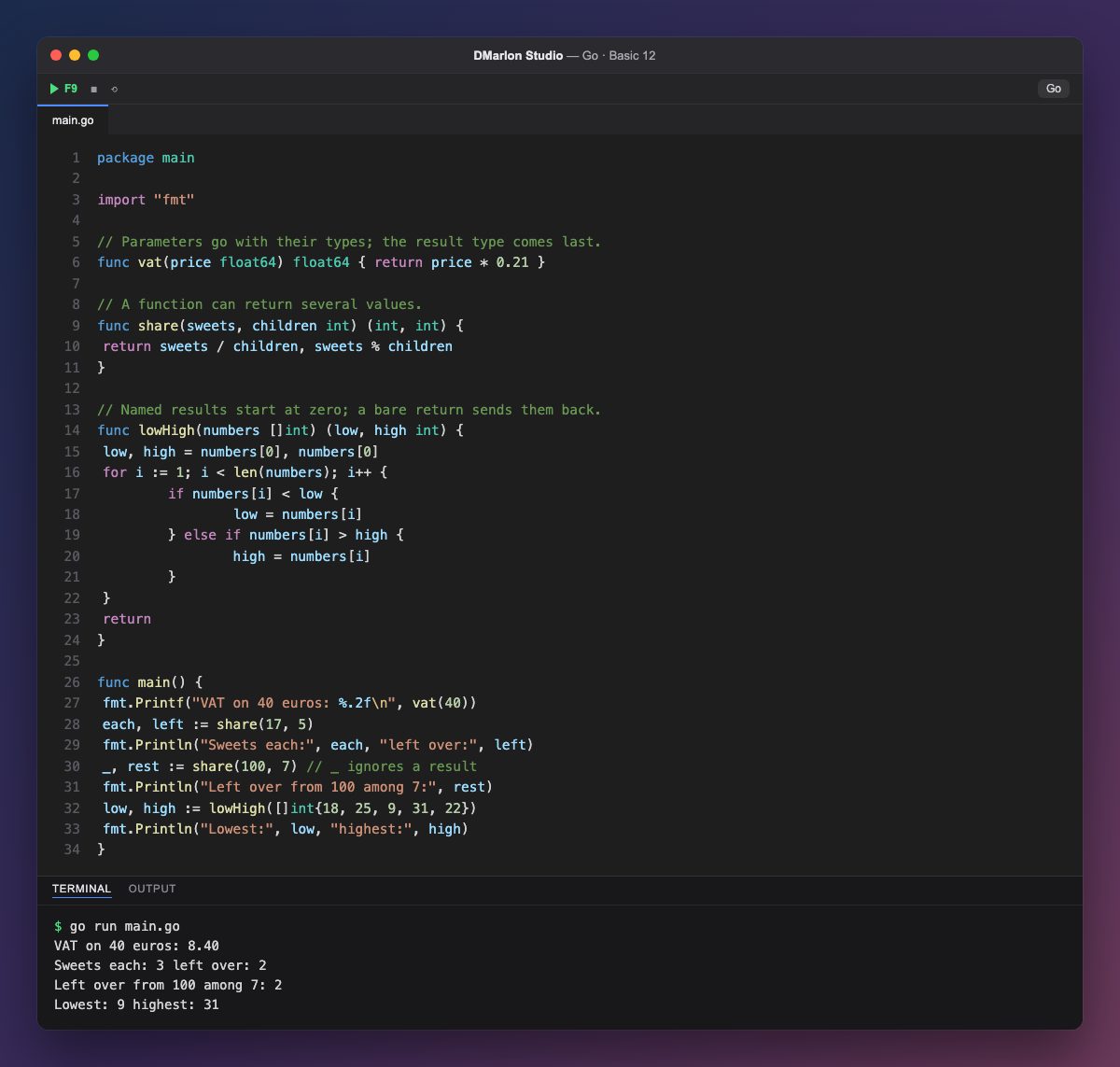
A function is declared with func, its name, its parameters with their types and, at the end, the type of what it returns: func vat(price float64) float64. return hands back the result: vat(40) gives 8.40 of VAT. When the body is short, it can sit on a single line.
In Go a function can return several values. share returns two ints, what each child gets and what is left over: return sweets / children, sweets % children. When two parameters in a row share a type, you only write it once: sweets, children int.
The caller picks up both results at once: each, left := share(17, 5) gives 3 and 2. You take all of them or none, so if you only need one, throw the other away with _, as in _, rest := share(100, 7).
Named results, like (low, high int), are variables that start at their zero value; the function fills them in and a bare return sends them back. lowHigh takes a slice, starts from the first number and walks the rest, keeping the lowest and the highest: 9 and 31.
Code · main.go
package mainimport "fmt"// Parameters go with their types; the result type comes last.func vat(price float64) float64 { return price * 0.21 }// A function can return several values.func share(sweets, children int) (int, int) { return sweets / children, sweets % children}// Named results start at zero; a bare return sends them back.func lowHigh(numbers []int) (low, high int) { low, high = numbers[0], numbers[0] for i := 1; i < len(numbers); i++ { if numbers[i] < low { low = numbers[i] } else if numbers[i] > high { high = numbers[i] } } return}func main() { fmt.Printf("VAT on 40 euros: %.2f\n", vat(40)) each, left := share(17, 5) fmt.Println("Sweets each:", each, "left over:", left) _, rest := share(100, 7) // _ ignores a result fmt.Println("Left over from 100 among 7:", rest) low, high := lowHigh([]int{18, 25, 9, 31, 22}) fmt.Println("Lowest:", low, "highest:", high)}Output · go run main.go
VAT on 40 euros: 8.40
Sweets each: 3 left over: 2
Left over from 100 among 7: 2
Lowest: 9 highest: 31
Key points
func name(p type) result { }declares a function.a, b intshares the type between parameters in a row.- A function can return several values:
return x, y. _throws away a result you do not need.- With named results, a bare
returnsends them back.
Exercise
Write func average(numbers []int) (float64, int), which returns the average and how many numbers there are, and use it with the same marks as lowHigh.